Consumer Study Results
100%
Agree the mask fades dark spots and age spots
94%
Agree skin looks and feels smoother and softer
93%
Agree the mask fades dark spots and age spots
91%
Agree the mask reduces pigmentation
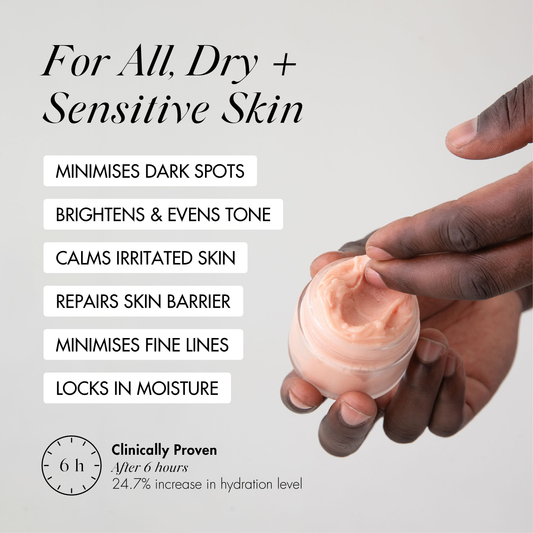
Based on a consumer perception study of 50 people, ages 18-64 completing 12 applications over 28 days using RUBY MARINE.


NEW eco-friendly reusable EVA bag
- Eco-friendly material: EVA is non-toxic and fully recyclable, making it a sustainable choice.
- Reduced carbon footprint: Using durable, recyclable materials helps minimize environmental impact and supports sustainability goals.
- Exceptional durability: EVA bags are strong, tear-resistant, and built to last, reducing the need for frequent replacements.
- Reusability: These bags are reusable, cutting down on single-use plastic waste and promoting a circular economy.
- Practical and stylish: The frosted design and secure zipper pulls combine aesthetic appeal with functionality, offering reliable storage.
Frequently asked questions
Combination (Dry Patches) + Sensitive Skin: The Ultimate Checker

How can I determine my skin type?
To identify your skin type:
- Wash your face with a gentle cleanser.
- Wait 15–30 minutes without applying any products.
Observe how your skin behaves:
- Dry Skin: Feels tight or flaky, with no oiliness.
- Oily Skin: Appears shiny with no dryness.
- Combination Skin: Oily T-zone (forehead, nose, chin) with dryness on cheeks or jawline.
- Balanced Skin: Neither oily nor dry, with a comfortable feel.
Why shouldn't I leave my skin bare after washing?
Never leave your skin bare for more than 60 seconds (“The Golden Minute” rule) after cleansing. Without immediate hydration, dry air pulls moisture from your skin through osmosis, leading to dehydration and that tight, dry feeling. To prevent this, follow cleansing with a leave-on exfoliator or serum, and face cream right away to lock in hydration and protect your skin.
Should I use a Vitamin C serum for dry, sensitive skin?
Yes, but it’s crucial to choose the right type. Vitamin C is a powerful antioxidant that protects skin from environmental damage, but some forms can irritate sensitive skin. Here's what you need to know:
Stable Forms of Vitamin C (Topical form)
- Ingredients: Sodium Ascorbyl Phosphate, Magnesium Ascorbyl Phosphate
- Benefits: Non-acidic, gentle, long-lasting potency((no discolouration)), and safe for sensitive, dry skin.
Unstable Forms of Vitamin C (Topical form)
- Ingredients: Ascorbic Acid, L-Ascorbic Acid
- Concerns: Acidic, prone to oxidation ((discolours to yellow/brown)), loses potency, and can cause stinging or irritation—especially for retinoid users, exfoliators, or those with a delicate skin barrier.
- Oxidation Explained: Think of an apple turning brown after being cut and exposed to air. Similarly, unstable Vitamin C oxidizes on the skin, losing effectiveness and potentially irritating sensitive types.
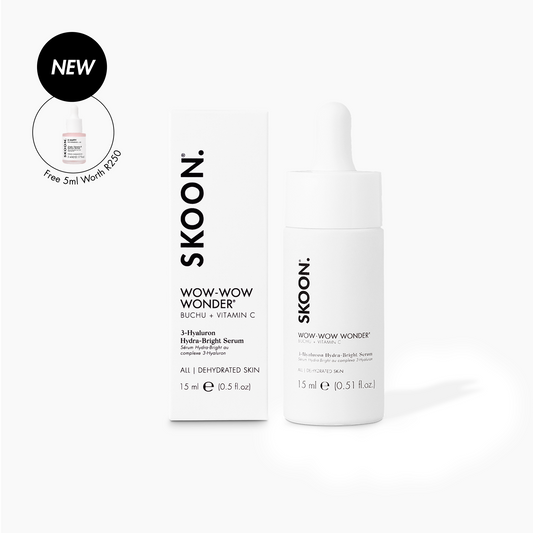
Opt for stable Vitamin C formulas (SKOON. Wow-Wow Wonder and Wow-Wow Wonder+ Nanopillow Serum) to ensure your skin reaps the full protective and rejuvenating benefits without irritation.
Why should I use a face cream with lipid-rich oils?
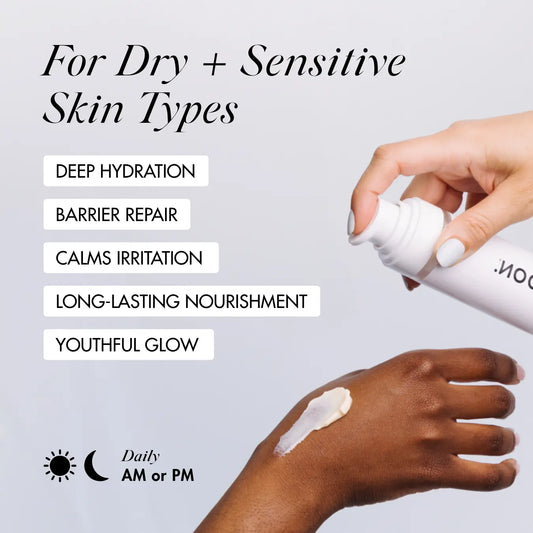
Face creams with lipid-rich oils are essential for repairing a damaged skin barrier, which often causes dryness, redness, and sensitivity. Hydration alone isn’t enough—your skin needs barrier-repairing ingredients like:
- Linoleic Acid
- Shea Butter, Marula Seed Oil, Coconut Oil, Sunflower Oil, etc.
- Punica Granatum Sterols
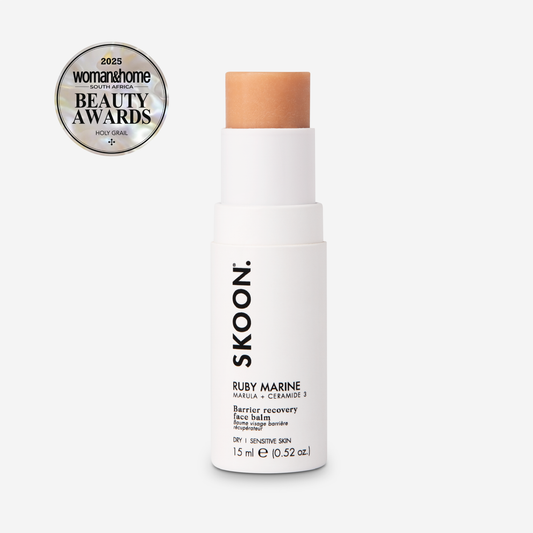
Recommended products: SKOON. Wrap Me Up and Ruby Marine.
- Apply the cream at night.
- Follow with the face balm to lock in moisture and boost repair.
With consistent use, visible redness and sensitivity can dramatically improve within four weeks, leaving your skin calm, resilient, and healthy. Give your skin the time it needs to heal—it’s worth it!
Why should I avoid cleansers that leave my skin feeling tight?
A tight feeling after cleansing means your skin’s natural moisture barrier has been stripped, leading to dryness and irritation. Avoid cleansers with harsh ingredients like:
- Sodium Laureth Sulfate
- Ammonium Laureth Sulfate
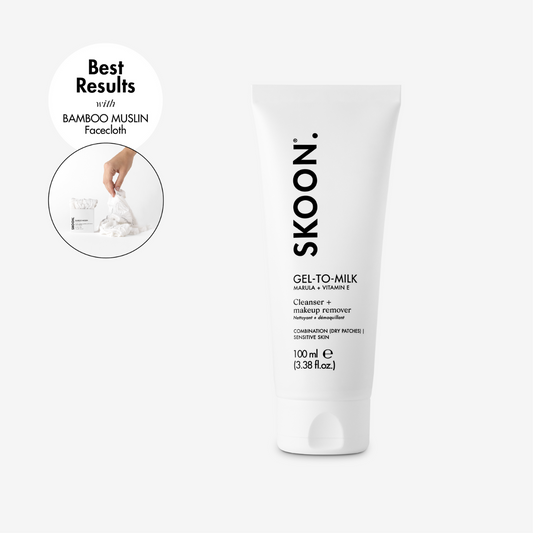
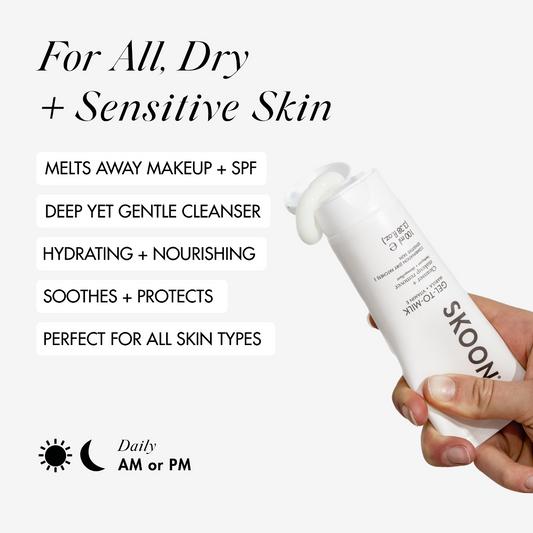
These ingredients can worsen dryness and flakiness, especially on sensitive skin. Instead, opt for gentle, nourishing cleansers like SKOON. Gel-to-Milk Cleanser - designed to clean without disrupting your skin’s moisture balance, keeping it calm, hydrated, and healthy.
Should I use an oil-based concentrate under my face cream?
Yes! Applying a moisturising oil concentrate, like SKOON. Rosegold, before your face cream adds an extra layer of nourishment. This helps lock in hydration, boosts your skin's moisture barrier, and enhances the effectiveness of your cream for softer, healthier skin.
Why is exfoliation important for combination skin with dry patches and sensitivity?
Exfoliation removes dead skin cells, unclogs pores, and improves product absorption. Use a gentle, leave-on acid exfoliant like SKOON. Fruitful Radiance to remove flakiness, promote cell renewal, and support healthy barrier function by boosting intercellular lipid production. Follow with hydrating products and sunscreen.
How to exfoliate per your skin type?

How should I use retinoids for combination (dry patches) + sensitive skin?
For combination skin with dry patches and sensitivity, use retinoids like SKOON. Retinin Night or Baku-Glow with caution:
- Start slowly: Apply at night on clean, dry skin, followed by a face cream to prevent dryness and irritation.
- Build tolerance: Begin with every other night and gradually increase use as your skin adjusts.
- Moisturise dry patches: Focus on hydrating dry areas to avoid exacerbating them.
- Sun protection: Retinoids increase sun sensitivity, so apply sunscreen daily.
- Gentler option: For sensitive skin, SKOON. Baku-Glowoffers a gentler, plant-based alternative.
Why is wearing sunscreen every day important for combination + sensitive skin?
Daily broad-spectrum sunscreen is essential for combination + sensitive skin. UV rays cause inflammation, making combination + sensitive skin more reactive. Apply a generous layer to your face and neck every morning, even under makeup. Look for formulas with calming ingredients like zinc oxide, such as SKOON. SunnyBonani SPF 40+, to protect and soothe easily irritated skin.
How can I supercharge my skin’s hydration and lock in moisture overnight?
To supercharge hydration and lock in moisture, apply Ruby Marine Face Balm over your face cream at night. This rich, nourishing balm forms a protective barrier that seals in moisture, keeping your skin hydrated, smooth, and deeply nourished while you sleep. As the final step in your nighttime routine, it maximizes hydration and promotes long-lasting barrier repair for a refreshed, glowing complexion by morning.
Is my skin purging or breaking out from a new product?
1. What is skin purging?
Skin purging is a temporary breakout triggered by active ingredients that speed up skin cell turnover (e.g., retinoids, exfoliating acids, Vitamin C). This process brings clogged pores to the surface faster before the skin clears.
2. Purging vs. Breakouts
Purging: Occurs in usual breakout areas, consists of small uniform pimples, and lasts 4–6 weeks.
Breakout/Reaction: Appears in new areas, lasts beyond 6 weeks, and may include painful cysts, irritation, or rashes.

3. What causes skin purging?
Ingredients that accelerate cell turnover include:
✔ Retinoids (RetinAL, Retinol, Tretinoin)
✔ Exfoliating Acids (AHAs like Glycolic Acid, BHAs like Salicylic Acid)
✔ Vitamin C (L-Ascorbic Acid)
✔ Benzoyl Peroxide, Azelaic Acid, Enzymes
4. What causes breakouts?
- Hormonal fluctuations: (e.g., menstruation, pregnancy)
- Stress & diet: (dairy, high-glycaemic foods)
- Clogged pores: (heavy products, comedogenic ingredients)
- Bacteria & environmental factors: (humidity, pollution)
5. Should you stop using a product if you’re purging?
No—purging means the product is working! Stay consistent but avoid adding new actives to prevent irritation.

6. How to minimise purging
- Introduce actives gradually: start once a week (evening), then increase to 2–3 times per week if no irritation after two weeks.
- Use gentle, hydrating skincare alongside actives.
- Avoid over-exfoliation and harsh scrubs.
- Stay consistent—purging is temporary!

7. Can non-active ingredients cause purging?
No—only cell-turnover ingredients trigger purging. If a product without actives is causing breakouts, it’s likely irritation or clogged pores.
8. What if it’s a breakout, not purging?
- Stop using the product and observe changes.
- Check for comedogenic ingredients.
- Patch test before full use.